Thursday, 10 April 2008

Victor Hely-Hutchinson: The Young Idea: Rhapsody for piano and orchestra

It is hardly possible to be an enthusiast of the music of Christian Victor Noel Hope Hely-Hutchinson (1901-1947) -for the simple reason that only five of his works are currently logged in the CD catalogues. And three of these are songs, one is a well scored and attractive Overture to a Pantomime and the last is the ubiquitous Carol Symphony. At least there are two versions of that score available. However, Dutton CDs have recently added a sixth – The Young Idea: Rhapsody for piano and orchestra. 
Now whether this work will raise Hely-Hutchinson’s awareness with the musical public is a matter of opinion. It is certainly not a piece that demands a great deal of attention or study: however, it is a lovely work that exploits the jazz influenced moods of William Walton, Constant Lambert, Arthur Bliss-and most significantly Billy Mayerl. 
The Rhapsody was first performed on 27th September 1930 at the Queens Hall. Fortunately the composer himself provided a programme note. He writes, "There are three themes: the first introduced by the strings, is not quite so serious as the ominous tone of the introduction might lead one to expect; the second…is still less so; but the third…would like to be thought dignified.”

Lewis Foreman, quotes a ‘po-faced critic’ who apparently wondered whether this work's true home ought to be the Savoy Hotel rather than the Queens Hall. In fact, Hely-Hutchinson himself had appended the score with ‘Cum grano salis’ – with a grain of salt. Yet I love the piece – it is far removed from some of the more ponderous pieces of music that carry intellectual approval. It has one overriding quality – it is downright fun – a quality lacking in music in all generations.
Hely-Hutchinson divided his time between academia and composing – he worked in South Africa as well as in the United Kingdom. Latterly he worked at the BBC in London until his early death.
Apart from the three songs alluded to – of which two are for children Hely-Hutchinson composed a string quartet, a piano quintet, a piano sonata, a viola sonata, and perhaps most urgently in need of reappraisal, the orchestral Variations, Intermezzo, Scherzo and Finale, This work was sufficiently regarded in its day to have been published by the Carnegie Collection of British Music in 1927.
This work is available on CDLX 7206

Tuesday, 8 April 2008

E.J. Moeran: Prelude for Cello & Piano

The Prelude (1941) was Moeran’s first piece which he dedicated to the cellist Peers Coetmore. It was gifted to her as a ‘keepsake’ whilst she was on tour with ENSA during the Second World War. Strangely, the first performance of the piece was in Alexandria in Egypt. They were later to become married - but that is another story. Three other compositions were to be dedicated to her: the magisterial and moving Cello Concerto, the Irish Lament and the Cello Sonata.

This is a simple yet profound piece. A broad and lyrical melody in major and 4/4 time is played over an extremely simple accompaniment. Common chords and sevenths are the staple harmonic feature. The tempo is ‘Adagio ma non troppo’ throughout. Although the piece remains in the opening key, there is a brief modulation towards the middle bars of the piece. The last page is wholly diatonic.
The musicologist, Geoffrey Self does not rate the piece highly. In his magisterial study he writes “it is a work of little distinction; the cello melody is shapely enough, but the piano part is frankly dull. It is....doomed to a humble place in grade examination lists.”
Yet perhaps the ‘dullness’ of the piano part give the piece much of its charm. The sheer lyrical quality of the melody is allowed to predominate without completion from the piano. The overriding characteristic of this piece is warmth. The Prelude for cello and piano was published by Novello in 1944.

Listen to this work on Lyrita SRCD.299 The cover of this wonderful CD shows Jack Moeran and Peers on Hergist Ridge.

Monday, 7 April 2008

Billy Mayerl: Sennen Cove

One of my musical desiderata over the years was Billy Mayerl’s tone poem Sennen Cove. Now most listeners will probably associate this composer with his ‘characteristic syncopated piano music’ and their orchestral arrangements. Typical of these works are the pieces such as Bats in the Belfry and the ever popular Marigold. However there was a more serious side to his compositional skills. This revealed itself in a number of Eric Coates-like pieces. Perhaps the best known is the Four Aces Suite which was orchestrated by Ray Noble. However Sennen Cove is one a group of three tone poems which include The Forgotten Forest and a Balearic Episode.

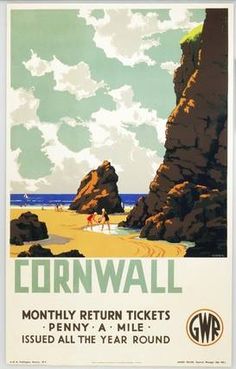
Sennen Cove is regarded as an impressionistic piece that is a musical portrait of a popular holiday resort on the Cornish Riviera. It was originally conceived as a piano work.
The piece opens with some impressive sea-music followed by a sweeping tune on the strings. These opening bars exhibit some interesting harmonic shifts that add to the impressionistic feel of this music. It could be argued that this ‘Onedin Line- type theme’ is over the top, yet it is great stuff- the composer is enjoying himself. It is the most accomplished part of the score.
Soon a change of mood allows some biting woodwind phrases to interrupt the proceedings before the summer haze descends on the scene once again. Now nature is given a rest: it is time for the children to play on the beach- whether it is paddling, rounders or shrimping it is surely fun. But soon the beach begins to empty: people head back to their boarding houses as the stormy weather begins to make its presence felt. Yet it subsides and the summer music returns to bathe the coast in its hazy sunshine. Mayerl introduces an ‘end of pier’ type of tune that builds up into quite a romantic climax before resolving itself into dance rhythms. Summer nights at the Palais! Yet the sea music closes the work – not quite mid-night but dusk is certainly descending on the cove.
Sennen Cove is no Tintagel or La Mer. It is quite short at just over eight minutes. And it could be argued that the musical material is unbalanced and inconsistent. Mayerl perhaps tries to introduce too many images into his music. Yet as a work by someone who is a decided miniaturist it is certainly enjoyable and evocative of a day at the seaside long ago.
Billy Mayerl’s original piano piece was probably orchestrated by Fred Aldington.
Sennen Cove is available on Dutton CDBP9766

Sunday, 6 April 2008

Three Choirs Festival: Gloucester 1925

I was recently browsing in the files of the Musical Times. In the September 1925 edition I happened across a short article outlining the highlights for that year's Three Choirs Festival which was to be held in Gloucester. It makes interesting reading – especially with regard to how the ‘novelty’ British works have survived.
However, the biggest blow to the Festival was the fact that Jean Sibelius was due to have had his Seventh and final Symphony given its British première – however he had been unable to complete it on time. The author of this article lamented the fact that this meant the Festival ‘lost’ its only connection with the modern music of the continent!

Other highlights of the programme included performances of Messiah, Mendelssohn’s Elijah and Verdi’s Requiem. Of the British classics, audiences were to hear Elgar’s The Apostles, Parry’s Job and Stanford’s Stabat Mater. Two major British Symphonies were also to be given – Elgar’s First in Ab and Granville Bantock’s fine Hebridean. And a lesser known and now largely forgotten work was Thomas Dunhill’s Three pieces for Organ & Strings.

The list of British new works include:-
Two Preludes for Orchestra by James Lyon
Motet ‘Love Incarnate’ by Basil Harwood
‘Men and Angels’ – A Choral Suite by Henry Walford Davies
‘The Evening Watch’ by Gustav Holst
Paradise Rondel by Herbert Howells
‘Glory and Honour’ – a motet by Charles Wood
Prelude for Orchestra by John Blackwood McEwen
‘A Sprig of Shamrock’ – song cycle by A.H. Brewer.

Sadly, five out of these eight ‘novelties' have disappeared ‘without trace’ – at least there are no recordings of them available on CD.
Fortunately the works by Howells, Charles Wood and Holst have survived with one, two and nine recordings respectively.
For the aficionado of British music I guess the top priority in the above list must be the Prelude by John McEwen and the Two Preludes by James Lyon. Yet I do feel a twinge of curiosity about “The Sprig of Shamrock” song cycle!

Friday, 4 April 2008

William Alwyn: Festival March

I recently posted about the new DVD that showcases the film Festival in London 1951 and noted the musical score was by Willam Alwyn.
Alwyn’s Festival March was composed as part of Festival of Britain celebrations. The Festival itself was held some six years after the end of the Second World War when the country was still in a period of considerable austerity. Furthermore the date was exactly one hundred years after the Great Exhibition of 1851. The concept of the Festival of Britain was to showcase the nation’s achievements both at home and abroad, scientific, artistic and manufacturing. 
It was at this time that the modernistic Royal Festival Hall as inaugurated by King George the Sixth and other members of the Royal Family and VIPs.
William Alywn was commissioned by the Arts Council of Great Britain to compose a celebratory march in the same genre as those of Edward Elgar’s Pomp and Circumstance and William Walton’s Crown Imperial Marches. Mary Alwyn, the composer’s wife, suggests that at first the composer struggled with this commisison and notes that the original sketches for the march were scored in 4:4 times. However, after much effort the music began to take shape after he restructured the piece in 12:8 time. The work remains a minor masterpiece of its kind. 
The Festival March opens with the usual fanfares and strong chords before it quietens down to allow the march to begin. Interestingly this material is presented more as a procession with a number of tableaux rather than a straight forward march. The music soon reaches an impressive climax before settling down to the 'trio.' This theme is introduced by unison violins and cellos before being repeated ‘grandioso’ by the full orchestra. After a brief bridge passage the powerful march theme is reprised. Naturally, in like manner to his exemplars, Alwyn brings back the 'trio' theme in all its glory. The work ends impressively.

No one listening to this march could be unimpressed. It surprises me that it is so little known amongst British music enthusiast who will readily admit to an appreciation of Walton's and Elgar’s marches. Critics were impressed at the time of its first performance but suggest that Alwyn had a lighter touch in his scoring and generally produced a march that was “more sprightly, and less grand and martial” than his predecessors. Another reviewer noted that Alwyn had managed to avoid the “conventional and wilful.” Yet a march designed for a 'Festival of Britain' or such event is surely largely redundant if it is not “broad and swaggering,” and complete with a "damn good tune.”

This work is available on Naxos, Lyrita and Chandos

Wednesday, 2 April 2008

Richard Stoker writing on Elizabeth Maconchy

The composer Richard Stoker wrote this brief pen-sketch about Elizabeth Maconchy – whom he had known for a number of years. Maconchy was one of the most important composers of her generation, writing a considerable corpus of music. Her major achievement is perhaps her 13 String Quartets. Richard writes:-

Elizabeth Maconchy was an elegant, kind, cheerful, helpful and extremely modest woman with a formidable personality. In many ways as a composer and person she reminded me of her near contemporary, Alan Rawsthorne – some two years her senior.

Each time I spoke with her I noticed that an understanding and helpful expression would cross her kind and characterful face –as Leonard Woolf has said of his meetings with the two Stephen sisters (Virginia Woolf and Vanessa Bell) that there was something “going on” at the back of the eyes as is noticeable with many highly intelligent people. Added to this there was often a worried, worn, tired look of regret or even perhaps hope in her eyes.

Could she be longing to return to her desk at the earliest possible opportunity to move on with her latest composition?
Elizabeth worked tirelessly for the Composer’s Guild and became a Vice President. She had been involved with the Macnaghten Concerts and the Society for the Promotion of New Music over many years and had a number of her own works performed - especially the String Quartets and other chamber pieces.
That look of hope and regret could explain the impression I got from her music and memories of her strong personality of the endless Ulysses theme.
She was definitely one of the few woman composers of real talent working throughout the most turbulent years of the last century. I can quite see why she is often said to have been RVW’s favourite pupil.
Elizabeth Maconchy would have been a dutiful student – unlike many of her contemporaries. And I should think a joy to teach. She was a well rounded extrinsically influential person quite unlike her near contemporaries – one who was totally reliable as a committee member.

At the Composer’s Guild she tried to support the AGM and the glorious luncheon afterwards! Elizabeth took part often -she was revered and loved by all her contemporaries.
Richard Stoker 26th March 2008


Sunday, 30 March 2008

Festival in London 1951: DVD Review

‘Festival in London 1951’ is a film that probably could not and would not be made in this politically correct age: for surely it is deemed unacceptable to sing the praises of Great Britain – be it our accomplishments at home and abroad, or in the scientific, artistic and manufacturing arenas. And besides we have come to belittle so much of our history, our achievements and our historical personages.

The Festival of Britain was held exactly one hundred years after the Great Exhibition in London so it is not surprising that the film begins with a series of paintings from 1851. However the images soon cut to the ‘present’ with a long view of Big Ben and the Thames. Soon the viewer can see the South Bank site with the well known Skylon and the Festival buildings- including the then new Royal Festival Hall.

It must be remembered that this was only six years after the end of the Second World War. The country still had rationing and life was lived in ‘austerity.’ The Labour government of Clement Atlee was struggling with debt - in spite of the Marshall Plan devised by the United States to assist Europe to rise from the ruins of six years of conflict. So it is a very positive production.
The motto of this film is telling-
This is the Festival,
Something Britain devised,
Halfway through this century,
As a milestone between past and future,
To enrich and enliven the present.

The Archbishop of Canterbury Geoffrey Francis Fisher, Baron Fisher of Lambeth, wrote in the Festival Programme book: “The chief and governing purpose of the Festival is to declare our belief and trust in the British way of life, not with any boastful self-confidence nor with any aggressive self-advertisement, but with sober and humble trust that by holding fast to that which is good and rejecting from our midst that which is evil we may continue to be a nation at unity in itself and of service to the world. It is good at a time like the present so to strengthen, and in part to recover, our hold on the abiding principles of all that is best in our national life.” Words that I doubt the present incumbent of that post would care to utter today.

The shot location is basically what is now deemed the South Bank and the funfair at Battersea Pleasure Gardens.
Throughout this film the music of William Alwyn runs as a thread. The great ‘trio’ tune of the March is heard juxtaposed with images of the Lion and the Unicorn. Interestingly we are reminded that the Lion is our Strength and the Unicorn is our imagination. We are encouraged to look at images of the crown, of the scales of justice and our national flags. The commentary describes the British belief in “tradition, peace, justice’ and now politically incorrectly “the nobler matters of patriotism.”

A variety of British achievements are noted including our great authors, the progress of science with such things as jet engines, atomic research and new manufacturing methods. The caring side of the nation is noted with reference to Florence Nightingale.

The final part of the film explores the Battersea Pleasure Gardens. Lots of things for children of all ages to discover. The Guinness clock, the fairground rides, the ‘Far Tottering and Oyster Creek Railway,’ the candy floss and the boating lake. Perhaps these were simpler pleasures for people who were young long before the Gamesboy was invented?
The film concludes with night time shots of the river, the funfair and a firework display.
I heartily recommend this film: it is a fine portrait of how we were some 57 years ago – with our hopes and aspirations intact but never forgetting that life can be full of fun as well as rejoicing in our noble achievements and productive manufacturing. It may not have been a golden age -but this film certainly warms the heart.

Friday, 28 March 2008

English Music Festival: News Release

I received this press release this morning:
Britten premieres and rare works by ‘the Cockney Wagner’ at the EnglishMusic Festival
The BBC Concert Orchestra, the Carducci Quartet, the Dufay Collective, David Owen Norris, Philippe Graffin and James Bowman are among the artists at the second English Music Festival (Oxfordshire, 23-27 May 2008) Premiere performances of no fewer than four works by Benjamin Britten, and a rare chance to hear music by Josef Holbrooke, ‘the Cockney Wagner’, are among the highlights of this year’s English Music Festival (EMF), which takes place in Oxfordshire from Friday 23rd to Tuesday 27th May.
Leading musicians from Britain and around the world will perform some of the very finest English music, including many unfairly neglected works from centuries past, and a ‘Grand Finale’ concert of new commissions, in four historic locations – Dorchester Abbey, Dorchester-on-Thames; Keble College,Oxford; Radley College; and All Saints Church, Sutton Courtenay.

Opening with Parry’s much-loved Jerusalem, the first night of this year’s Festival provides a rare opportunity to hear ‘hidden gems’ such as Holbrooke’s Birds of Rhiannon, Rawsthorne’s deeply nostalgic Practical Cats, Mackenzie’s gorgeous Benedictus and Bantock’s Celtic Symphony, performed by the BBC Concert Orchestra under the expert direction of Barry Wordsworth. Other concerts in this year’s Festival see the highly accomplished pianist Panagiotis Trochopoulos make his EMF debut with a series of premiere performances of piano works by Holbrooke, ‘the Cockney Wagner’, while the internationally acclaimed violinist Philippe Graffin, who made such animpact with his performance of Coleridge-Taylor’s Violin Concerto at the BBC Proms three years ago, brings to the Festival a selection of music by Delius, Elgar, Alwyn and Coleridge Taylor.

No fewer than four Britten premieres are on the programme for a concert by the world-renowned counter-tenor James Bowman, who is joined by the treble Andrew Swait andpianist Andrew Plant. Bliss’s hugely evocative Pastoral and Vaughan Williams’s Te Deum, together with works by Holst and Bridge, and an extremely rare performance of Norman O’Neill’s unpublished Pastoral, are brought to us by the Milton Keynes City Orchestra and the City of London Choir under their dynamic conductor HilaryDavan Wetton. The Bridge Quartet performs a selection of works by Frank Bridge, as well as Delius’s charming Late Swallows, the fascinating Three Winter Poems by Alwyn, and Britten’s arrangement of Purcell’s Chacony.

Old favourites such as Elgar’s Serenade and less familiar pieces such as Vaughan Williams’s Concerto Accademico feature in a concert by Vox Musica, together with works by Finzi, Howells and Holst, while Vaughan Williams’s Fantasia on a Theme of Thomas Tallis – one of his most familiar and bestloved works – features in a concert by the Amaretti Orchestra, which also includes Ireland’s Downland Suite, Elgar’s Introduction and Allegro, and Finzi’s Clarinet Concerto, with David Campbell as the soloist. The award-winning Carducci Quartet performs Vaughan Williams’s String Quartets, together with Moeran’s beautiful String Quartet in Eb. Organ music by the much under-rated British composer Dyson, together with his Agincourt andElgar’s Banner of St George are performed by the Andover Choral Society under the multi-talented David Owen Norris, who also provides a lighter touch to the Festival with a late-night of piano works by Billy Mayerl. 

Early Music is well represented at this year’s EMF, with the highly acclaimed Dufay Collective taking us back in time to the merry old England of the sixteenth and seventeenth centuries, and the much-praised Cannons Scholars, under the direction of John Andrews, performing eighteenth century works such as Arne’s Symphony No.4 and Judgement of Paris, and In Yonder Grove by Linley, ‘the English Mozart’. 

The Grand Finale of this year’s English Music Festival is a concert of new compositions – all specially commissioned by the EMF – which willdemonstrate how contemporary music can be innovative and exciting whilst keeping its roots firmly in the English tradition. Composers featured in this major concert include Matthew Curtis, Philip Lane, Ronald Corp, CeciliaMcDowall, Paul Carr and David Owen Norris. Tickets for the Festival are on sale from April. Discounts are available forgroup bookings.

Check out the Festival website, http://www.englishmusicfestival.org.uk/, for the full EMF programme, ticket information and prices, and details of the EMF Friends scheme (which offers priority booking and individual discounts).

Thursday, 27 March 2008

William Blezard: Duetto (1951)

A music reviewer has said that this Duetto is an interesting way to spend six minutes. And I wholeheartedly agree. This is one of these gorgeous works that makes one wonder why it has hardly been heard over the last half century. How can it have been hidden away on the library shelves for all this time? It was written in 1951 as a response to Blezard’s friend and fellow composer Clifton Parker’s suggestion that he [Blezard] needed to write music in a more contrapuntal manner. Parker is noted for his work on film music including The Blue Pullman, Treasure Island and Sink the Bismarck!
The Duetto is well scored for solo viola and cello accompanied by strings and makes extensive use of canon and other traditional devices. The work is pervaded by one of the composer’s lovely tunes that is quite spine tingling and stays with the listener long after the six minutes has expired. Although appearing on a CD of light-ish music, this does not really belong to that genre as such, but it is actually quite classical, if not baroque. I suppose the ‘light’ epithet can be applied because of the high strings which often carry the tune an at times give it a sort of ‘Mantovani’ feel. Yet this work has some lovely reflective writing in the English pastoral vein that never loses interest for a moment. It is fair to say that this work is more ‘concertante’ than ‘concerto.’

I cannot help thinking of Richmond Park when I hear this music – and of course William Blezard lived at nearby Barnes for many years.

Duetto on Naxos 8.555069

Sunday, 23 March 2008

Richard Stoker: Piano Sonata No.2 Op.71 (1992)


The Piano Sonata No.2 Op.71 was composed in 1992. This is a masterpiece: I love every bar of it. It was specially written for Eric Parkin and suitably exploits his abilities as a jazz pianist. however, this Sonata is not pure jazz- neither is it any kind of crossover music. It is unusual in being written in five movements -all of which have Italian titles to them. The first is 'Suonare' which means to sound - more often in connection with pealing bells. It is a complex first movement with both first and second subject and appropriate development. The composer has sought to include great contrast and he achieves this well. There is lovely piano writing that is both warm and romantic. Technique-wise there are lots of scales and pseudo glissandi. There is of course a more cerebral side to this music, especially in the development. But somehow I think the composer is wearing his heart on his sleeve here.

The second movement continues the interest - with a 'Cantare I.' Here we have jazz effects -where the right hand has the interest and the left hand is doing a 'cocktail lounge' style accompaniment. According to the composer, the outworking of these melodies is left to the performer. However, Eric Parkin has pointed out that he keeps to the text of 'Cantare I' but uses considerable melodic freedom in the third movement 'Cantare II.;

The 'Scherzare' - Italian of course for Joke - is not a classical scherzo. In fact there is a touch of Debussy about his music. Stoker appears to have discovered and subsequently enjoyed the whole tone scale. There are pauses, chords, scales and silences. Good stuff. And effective piano writing.

The last movement -after the somewhat improvised 'Cantare II' is a brief Toccare - Italian for touch. Once again Stoker shows a preference for cyclic forms. There is reference to much that has gone before.

Friday, 21 March 2008

Alun Hoddinott: Sonata for Organ (1978)

The nineteen seventies were a productive time for Alun Hoddinott. The opus magnus was his opera The Beach at Falesa – a strange tale of voodoo magic and corruption set in the South Seas with the original ‘book’ by Robert Louis Stevenson. It was first performed in 1974. The beautiful A Contemplation upon Flowers was first heard at the Fishguard Festival in 1976. The following year saw performances of the Sinfonia Fidei, the considerable Passaggio for full orchestra and the children’s opera “What the Old Man Does is Always Right”.
The Sonata for Organ Op.96 No.2 was written in 1978 and was perhaps the most significant work of that year. It was dedicated to the accomplished organist Huw Tregelles Williams. Williams was later to become the Head of Music at BBC Wales in 1984 and then become the first Director of the BBC National Orchestra of Wales in 1992.
The composer writes that the first movement “develops two ideas – a chordal fanfare with a flourish, contrasted with a more imitative contrapuntal texture.” Certainly the work commences with an immediate statement of the first ‘idea.’ The music quietens down as the composer introduces the intricate part writing which reappears in varying guises as the music of this movement progresses. There is also some contrasting material which is surely designed to slow the pace down: four bars of string tone chords accompanied by a quiet pedal phrase give the impression of timelessness. Soon the pace picks up again and after reference to the contrapuntal passage and a loud statement of the ‘flourish,’ the music ends very quietly with swell strings stops.
The second movement is likened to a chorale prelude with “three varied statements of a chorale – like a paragraph preceded and followed by a tune on the pedals moving against held chords on the manuals.” The actual musical material is quite simple – it is just that the chords have heaps of added notes to spice up the proceedings. Once again Hoddinott makes use of the string stops on the swell – especially the voix celeste with long breathed chords. The general effect is quite magical.
The finale is a relatively uncomplicated toccata that employs the baroque concept of the ‘ritornello’ or short recurring passage. It is written in 6/8 and signed allegro molto. The main argument is split up between hands on the swell with a light pedal accompaniment, before an interesting ‘four against three’ passage leads to a trill. A short pedal solo lead to a return of the original music before staccato chords played on the swell interrupt the argument. A loud ‘unison’ passage on the great with more staccato chords leads to the final statement of the opening material, this time with full pedal. At the end the predictable solo reeds are drawn. The work concludes with an upward scale leading to an un-harmonised Eb in octaves.
James Dalton writing in the March 1981 edition of the Musical Times was less than complimentary about the Sonata – he wrote that it struck him “as a trivial pot boiler showing no originality or ingenuity of design and a most un-thoughtful lack of enterprise in its use of the instrument.”
Yet Malcolm Boyd, commenting on the first performance is more generous – he insists that the new Organ Sonata “reminded us how well suited [Hoddinott’s musical style] is to the king of instruments. He praised especially the “atmospheric harmonies” of the central Andante.
Listening to this piece some thirty years after its composition reveals a work that is good but not perhaps one of the composer’s masterpieces. Certainly Boyd is correct: the most impressive part of this Sonata is the slow movement with its lovely nocturnal harmonies. However it is a piece that needs to be kept in the repertoire as it represents the composer’s most important essay for the organ.

The first performance was at the Cardiff New Hall on 6th March 1978. The score was published in 1980 by Oxford University Press.
Jane Watts has recorded this work on Priory PRCD 389


Thursday, 20 March 2008

William Mathias: Serenade for Small Orchestra

William Mathias is one of the great Welsh composers who include Grace Williams, Alun Hoddinott and David Wynne. He combined composition with teaching – he held a post at the University of Bangor for many years. Mathias was keen to promote Welsh music and instituted the St. Asaph Festival.
He has written a wide variety of music – from symphonies and concertos to organ music and choral pieces. Virtually the whole nation (over the age of 27) heard his anthem Let the people praise Thee, O God which was sung at the wedding of Prince Charles and Lady Diana Spencer in 1981. In spite of writing in different styles aimed at a variety of audiences, most of his music is approachable and enjoyable. In particular he produced works for young musicians to play. Mathias wrote his Sinfonietta – initially called Dance Suite – for the Leicestershire Schools Symphony Orchestra in late 1966. But three years earlier he received a commission from the Carmarthenshire Education Authority for a piece to be premiered by the County Youth Orchestra.
The Serenade was composed in 1963 and has three contrasting movements. It is written for a small, almost Haydn-esque orchestra.
The first movement is an ‘allegretto’ which immediately announces the composer’s fondness of woodwind. He has a particular liking for the clear cut rhythmical sound of these instruments however this is balanced by a brassy swing. There are particularly attractive harp figurations that counteract the angularity of the clarinets and oboes. The general mood of this opening movement is of lightness – yet there are a few reflective moments.
The ‘lento’ is based on a tune that sounds a bit like ‘Scarborough Fair’ but surely this is coincidental rather than deliberate. Laugharne would be the holiday resort in Carmarthenshire – not the North Riding town! Yet this is wistful, sometimes dark music that retains a slight Mathias-ian swing. The scoring is typical – contrasting woodwind and strings. The movement never quite reaches a climax – it is really more “ebbing and flowing.” It is really quite lovely.
The last movement is dance music - an allegro con slancio. Slancio means with ‘dash and impetus.’ It is an interesting movement that owes little to any recognizable folk tune or country dance. However the instrumentation is varied and the style certainly sounds typical of the composer.

The work has been criticized as being derivative: he was understood to be still defining (somewhat disingenuously, I feel) his unique voice. Mathias was influenced by the ‘greats’ of his day – Bartok, Stravinsky and Tippett. Yet another influence was the music of George Gershwin. It was the latter who lent the jazzy style that pervades much of the composer’s later music. Taken in the round this work is a fine introduction to the music of William Mathias: it epitomises the joie de vivre and the other side of the coin – the composer’s introspective mood.
The work was released by Marco Polo on 8.225048.

Friday, 14 March 2008

Elizabeth Maconchy: Three Bagatelles for Oboe & Harpsichord.

I recently wrote that I felt Maconchy’s Three Bagatelles for Oboe & Harpsichord was a far removed from the ethos of her teacher Ralph Vaughan Williams as it is possible to imagine. I conceded that, although I was a great enthusiast of Maconchy’s music, I could not quite get to grips with these three miniatures. Yet a friend has challenged me to listen to them again and to make a few notes about them.

The work was composed in 1972 for a recital given by Lady Barbirolli (Evelyn Rothwell) and her duo partner Valda Aveling in the Purcell Rooms. Maconchy had already shown an interest in baroque instrumentation – she had composed a number of pieces for solo harpsichord in 1965 including Notebook and a Sonatina. She was to go on to write Touchstone for oboe and chamber orchestra and Trittico for two oboes, bassoon and harpsichord.
The opening allegro of the present work has a brisk rhythmic drive which emphasises the characteristics of both instruments. The 'feel' to the music is largely neo-classical – I believe that it actually nods to Stravinsky more than to Bartok – who was a great influence on Maconchy. It has been noted that the chord clusters in this movement are reminiscent of a passage from The Rite of Spring!
The 'poco lento' is perhaps the most idiomatic part of this work. It is not stilted or static but has the freedom of a fantasia. There is a spaciousness about this music that defies the three and half minute time span. The spread chords on the harpsichord are particularly appropriate.
The last movement is signed as a ‘vivo’ –perhaps it would be better to say that parts of it resemble a 'perpetuum mobile.' This is great writing for the players and develops through a variety of time signatures. There are a few moments of relaxation before the work closes with considerable élan.

These three miniatures are beautifully constructed – there is no doubt about that. They are an important addition to the repertoire for oboe and harpsichord -if for no other reason than few ‘modern’ composers choose to write for this combination. Yet more than this, these Bagatelles grow on you -there is a haunting quality about them that makes them compulsive. I am coming round to liking them…

Visit the link below and search around for a CD called "From Leipzig to London” for full details of this work and others on this fine disc.

Monday, 10 March 2008

Lennox Berkeley: Mazurka Op.101b

I was flicking through Lennox Berkeley’s ‘Collected Works for Solo Piano’ and was lamenting how much of this great music is well beyond my technique. However I was pleasantly surprised to come across one small piece that is within my gift – the Mazurka Op.101b. It is rated at about Grade 6!
Now, I always recall a pianist telling me that if a piece is easy to play it is hard to interpret – and I guess this applies to the Mazurka. However I was able to get my fingers round the notes and I discovered a pleasant and enjoyable piece.

The Mazurka was commissioned by the BBC to mark the 250th anniversary of the birth of Haydn. Berkeley was one of six composers who were invited to write a combined ‘Homage to Haydn.' The other five were George Benjamin, Richard Rodney Bennett, Robert Sherlaw Johnson, John McCabe and Edmund Rubbra.

Berkeley chose to write a ‘Polish’ dance – which as far as I am aware was not one of Haydn’s chosen dance forms! However Berkeley had already nodded to Chopin with a set of Three Mazurkas written in 1949 to celebrate the Chopin death centenary. And of course Chopin was an influence on much of Berkeley’s more ‘advanced’ piano music too.

The Mazurka is very short. It lasts a little under two minutes. But into that time there is considerable variety and invention. The piece opens with a Scottish accent – at least there is a scotch snap! It could be argues that this piece is written in ‘salon style – but I feel that would be slightly dismissive. This is a work that displays a sense of purpose: it is written with clarity. A bitter-sweet tension emerges as the composer explores a variety of keys and strength of dissonance in a short space of music. The scotch snap recurs to bring the miniature to an end.
The Mazurka is well played by Len Vorster on a Naxos recording of the composer’s works.

The pieces was first performed in a broadcast by John McCabe on 18th March 1982 London BBC Studios. It was one of the last that Lennox Berkeley wrote before illness caused him to largely cease composing. 
For the curious, the Op.101 was a Bagatelle for two pianos and four hands from 1981. And finally, as far as I am aware, apart from the present work, only the offering by Edmund Rubbra to the Homage collection is available on Dutton.

Sunday, 9 March 2008

Alan Rawsthorne: Kubla Khan – a world premiere

So often the works of Manchester-born composers are ignored in the concert hall. How often do we hear music by Eric Fogg, Hubert Proctor-Gregg or Thomas Pitfield presented to the musical public in the North Country? I have always felt that the Halle Orchestral is less than supportive of ‘native’ music and tends to concentrate on ‘Euro’ pot boilers.
So it is refreshing to discover that the Amadeus Orchestra is due to perform a ‘lost’ work by Alan Rawsthorne on 30th March 2008 at the Bridgewater Hall, Manchester.

The Amadeus Orchestra is “one of the world's foremost training orchestras for young professionals and music students.” They meet some three times a year for top class coaching and give exciting and important performances. Their next concert will include the world premiere of Rawsthorne’s Kubla Khan and a performance of Mahler’s massive Resurrection Symphony.

Kubla Khan was written in 1940 for soloist, chorus and orchestra and sets the well known words of Samuel Taylor Coleridge’s exotic poem. After the work’s first performance in 1940 the full score was lost in a wartime bombing raid. However the vocal score survived and has been realised for performance by Edward Harper who has provided a new orchestration.
It is surely a great achievement that this long forgotten work by a Haslingden born composer has been rediscovered and presented to Manchester concert-goers. This surely promises to be a ‘colourful’ work that presumes to be a ‘dream like evocation of an exotic land.’

Amadeus Orchestra Webpage

Friday, 7 March 2008

Gerald Cumberland: Set Down in Malice

In this short extract from this witty volume – written in 1918 - Cumberland, a journalist is discussing a massive choral work by Granville Bantock (probably the Rubaiyat of Omar Kayim) with Dr Vaughan Williams and Dr. Cyril Rootham.

“I have a very bad memory for the names of public houses and hotels (though I love these places dearly), and I regret that I am unable to recall the name of that very attractive hotel in Birmingham where, early one evening, Dr Vaughan Williams, travel-stained and brown with the sun, walked into the lounge and began a conversation with me. He had walked an incredible distance, and though, physically, he was very tired, his mind was most alert, and we fell to talking about music. He told me that he had studied with Ravel, and when he told me this I reviewed in my mind in rapid succession all Vaughan Williams's compositions I could remember, trying to detect in any of them traces of Ravel's influence. But I was unsuccessful. To me he, with his essential British down-rightness, his love of space, his freedom from all mannerisms and tricks of style, seemed Ravel's very antithesis.

Like myself, he had come to Birmingham to listen to music, and the following evening, after we had heard a long choral work of Bantock's, we had what might have developed into a very hot argument. With him was Dr Cyril Rootham, a very charming and cultivated musician, and both these composers were amazed and amused when, having asked my opinion of Bantock's work, I became dithyrambic in its praise.
"But I thought you were modern?" asked Vaughan Williams.
"I am anything you please," said I; "when I hear Richard Strauss I am modern, and when I listen to Bach I am prehistoric. But why do you ask?"
“Moody and Sankey," murmured Rootham.
Vaughan Williams laughed.
“Good! Damned good!”He exclaimed, turning to his companion.
“You’ve got it. Hasn't he, Cumberland?”
“Got what?”
"It's him. Bantock, I mean. Now, don't you think to concede us this one little point: don't you think that this thirty-two-part choral work of Bantock's is just Moody and Sankey over again? Glorified, of course: gilt-edged, tooled, diamond-studded, bound in lizard-skin, if you like: but still Moody and still Sankey."
I clutched the sleeve of a passing waiter and ordered a double whisky.
“One can only drink," said I.” And when people disagree so fundamentally as we do, whisky is the only tipple that makes one forget."

Wednesday, 5 March 2008

Jack Beaver: Cavalcade of Youth

I recently wrote in these pages about Percy Whitlock’s Dignity & Impudence March for Orchestra. I suggested that if it were as well known as Elgar’s Pomp & Circumstance offerings it would be as highly regarded. The same sentiment applies the little known, but well respected composer Jack Beaver and his Cavalcade of Youth.
Beaver (1900-1963) is perhaps best known as a ‘backroom boy’ in the world of music: he worked for the BBC and the Gaumont -British Film Company where he provided the scores for dozens of films, radio and TV programmes. Perhaps his most famous film score is that for The Thirty Nine Steps.

The Cavalcade of Youth was first heard in a 1950’s radio play called 'The Barlows of Beddington.' It became an instant hit. Rob Barnett at MusicWeb suggests that Beaver “leans on Tchaikovsky's Symphony No. 5 and Capriccio Italien for Cavalcade of Youth and then pulls off a nice dignified trio melody.” My similitude would be William Walton. All the elements are here –the opening fanfares, the jaunty march and the impressive, moving and finally triumphant trio tune. Perhaps it lacks the dissonant ‘bite’ of Walton -but it certainly has the power and the interest. The only downside is that the music, which was written in 1950, does not really seem to relate to the present iPod and Gamesbox generation of youth!

Cavalcade of Youth on Hyperion

Tuesday, 4 March 2008

Alec Rowley: Piano Concerto in D major

For those of us who have learnt to play the piano over the last half century the name of Alec Rowley will be extremely familiar. Even today, when I visit the second-hand music shops in Kelvinside and Fishergate in Glasgow and York respectively, I am amazed at the number of volumes of music by this composer that are always available. I have managed to build a small collection of his easier pieces. I doubt that there is much in print these days, but historically there are reams of miniatures and teaching pieces available to the interested explorer and collector. 
It was not until about a decade or so ago that I realised that Mr Rowley had a serious side to him - that is until I inherited an album of organ works. None of these are for neophytes and all of them seem to be interesting examples of the 'between the wars' genre. However I will always remember him for two salon pieces – Witchery and Hornpipe – both for piano. I still play these at least once a month!
I listened to the Concerto again on Monday whilst travelling up to London. I have known about this piece for a wee while and have ‘plonked' my way through the score. However, until Naxos released this work about three years ago, I had not heard it. And what a pleasure it is: it is a fine discovery and deserves its place in the repertoire.
The work received its premier in a BBC broadcast way back in 1938. It is scored for soloist and strings; however there are optional parts for timpani and percussion. This is the version recorded on the Naxos release. From the very first note, we are in the presence of a delightful work. Forget anyone who says that it relies heavily on Delius or Britten or Cyril Scott. This is an original concerto that is well scored and has ‘a breezy, open-air freshness about it’ that is both charming and satisfying. The work is well constructed, with the opening of the last movement mirroring the introduction to the first. My only criticism is that this concerto is too short! But Naxos and Mr Donohoe please note, there is another Piano Concerto and Three Idylls for Piano and Orchestra just begging to be recorded!
Piano Concerto in D major on Naxos

Monday, 3 March 2008

Montague Phillips: Hillside Melody Op.40

Montague Phillips was better known for his light opera The Rebel Maid. However, he did write a deal of music for the orchestra, including both ‘light’ and ‘serious’ pieces. One of the more attractive of these is The Hillside Melody which is a fine example a ‘light’ tone poem.
One cannot help feeling that this score could have been written for, or perhaps fitted round a film score. In particular I can imagine one of the British Transport Film group’s offerings encouraging people to get out of the City and take a trip to the Home Counties. It is not too fanciful to see musical images of places like Leith Hill and the Surrey hills. The score exudes country things – perhaps sports or maybe just a ramble in the woods. Here a Green Line bus arrives from the city and perchance a horse and rider are making their way along a rather secret bridleway. Or maybe two lovers are walking arm in arm beside a clear river.
It is easy to say that Phillips was influenced by Percy Grainger in some of his music: and of course Fred. Delius is never too far away. But this work was not written for the highbrow concert hall – it was composed for smaller ensembles playing music at the end of the pier or perhaps the bandstand.
Yet although the pictures invoked are quite definitely South of England there is an Irish touch in this music. A friend of mine remarked that she could hear allusions to the Londonderry Air in some passages of this work. However it does not pay to get too engrossed in trying to unpick references and sources in a piece like this. It is sufficient to note that it is a satisfying work that conjures up a number of happy images in the mind’s eye. Who can ask for much more than this?
Hillside Melody Dutton CDLX7158

Saturday, 1 March 2008

William Walton’s Two Pieces for Strings from Henry V

To many people the favourite screen version of this great Shakespearean play is the one starring ‘Larry’ Olivier with Bill Walton’s fine score. However long before discovering Walton or his music, I remember as a child sitting in the lounge with my father watching the Olivier film. I was not impressed and announced this fact to him – in a facetious manner! My father read me a lecture as to what the film meant for the many men who were to ‘roll up’ on the French coast on D-Day (6th June 1944) and the deep debt owed to those who ‘handed in their mugs and blankets’ during those momentous days. My late father, a sapper, was one of the first to struggle up ‘Gold Beach’ on that now far off June morning. I can never hear this music now without moist eyes.
I first came to appreciate the music by way of Christopher Plummer’s moving account on Chandos [CHAN8892]. This had been arranged as a sequence by Christopher Palmer. For me the highlight of this film music is the exquisite Death of Falstaff and the equally moving Touch Her Sweet [‘Soft’ in Craggs Catalogue] Lips and Part. It was originally taken from the film’s score and later arranged for string orchestra with a nod towards performance by amateurs. “Touch her Sweet Lips” has some interesting Waltonian harmonies and the well exploits divisi writing for the strings. It has been said that Walton looked back to Purcell when he wrote the music to accompany the Death of Falstaff. It is a nice conceit.
These two miniatures for strings sum up the depth of thought in this great fusion of English stage and music. They are at once simple yet profound.
Two Pieces