Showing posts with label Joseph Haydn. Show all posts

Friday, 19 September 2025

Pedantic pupil frustrates Haydn.

Between 1791 and 1795, Franz Joseph Haydn (1732-1809) made two triumphant visits to London, transforming his reputation from court composer to international celebrity. Invited by impresario Johann Peter Salomon [1], Haydn arrived to find his music already beloved by English audiences. 
He composed twelve 'London' Symphonies [2], including the famous Surprise and Miracle, which captivated listeners with their wit and innovation. Haydn was feted by royalty, mingled with literary and musical elites, and enjoyed a romantic friendship with widow Rebecca Schroeter [3]. 
These years revitalized his creativity and marked a golden chapter in his career, culminating in works like The Creation, inspired by London’s vibrant culture. One anecdote talked about Haydn’s dealings with a would-be pupil:-

“Haydn was delighted with London in most of its aspects, but we have an idea that there was one kind of pupil that he was perfectly willing to leave behind when he returned to his beloved Vienna. But probably he found them there as well as in London. They are not limited to England.

One day a nobleman called on him and, expressing his fondness for music, said he would like Haydn to give him a few lessons in composition at one guinea per lesson. [4]

Haydn promised to gratify him and asked when they should begin.

"At once, if you have no objection," said he, drawing from his pocket one of Haydn's quartets.

"For the first lesson let us examine this quartet and you tell me the reasons for some modulations and certain progressions [5] that are contrary to all rules of composition."

Haydn could offer no objection to this. They then set to work to examine the music. Several places were found which, when asked why he did this and that, Haydn could only say he wrote it so to obtain a good effect.

But ‘My lord’ was not satisfied with such a reason and declared unless the composer gave him a better reason than that for his innovations, he should declare them good for nothing. Then Haydn suggested that the pupil rewrite the music after his own fashion; but this he declined to do, though he persisted in his question, " How can your way, which is contrary to all rules, be the best.”

At last Haydn lost all patience with this noble critic, and said:

"I see, my lord, that it is you who are so good as to give lessons to me. I do not want your lessons, for I feel that I do not merit the honour of having such a master as yourself. I bid you good morning.””
From Anecdotes of Great Musicians by W. Francis Gates (1895), p.91.

Notes:
[1] Johann Peter Salomon (1745–1815) was a German-born violinist, composer, and impresario. Renowned for bringing Haydn to London, he organized the premieres of Haydn’s “London” symphonies. Salomon also worked with Mozart and Beethoven and was one of the founder members of the Philharmonic Society.
[2] Refers to the twelve symphonies Nos.93-104 composed between 1791-1792 and 1794-1795. The latter, the London, being his final offering in this genre.
[3] Rebecca Schroeter (1751–1826) was a Scottish-born amateur musician and patron of the arts in London. She married German composer Johann Schroeter, defying her family's wishes. Widowed in 1788, she later developed a close, affectionate relationship with Joseph Haydn during his London visits. Their preserved correspondence reveals deep emotional intimacy and mutual admiration. Rebecca lived at No.6 James Street, Buckingham Gate.
[4] “Progression” means chord sequence, tonal movement, resolution, tension, cadence, modulation, function, voice-leading, structure, flow etc.
[5] About £105 at today’s value.

Thursday, 19 September 2024

The Most Gallant Haydn...

This is a good, possibly apocryphal, story of Josef Haydn’s time in London sometime between 1791 and 1795.

“When in London, Haydn once visited the studio of that celebrated portrait painter, Sir Joshua Reynolds. He there saw a picture of Mrs. Billington, one of the best-known singers of her day. Reynolds had represented her listening to the song of the angels. On being asked for his opinion of the painting, Haydn remarked:

"Yes, it is a beautiful picture; it is just like her; but there is one strange mistake."

"A mistake! How is that?" exclaimed Reynolds, who could hardly believe his ears.

"Why," said the gallant composer, "you have made Mrs. Billington listening to the angels, when you ought to have painted the angels as listening to her!””

From Anecdotes of Great Musicians by W. Francis Gates (1895)

Sir Joshua Reynolds (1723-1792) was a prominent English painter, renowned for his portraiture. Born in Plympton, Devon, he was a founder and the first president of the Royal Academy of Arts. Reynolds promoted the “Grand Style” in painting, emphasizing idealization over mere representation. His works often depicted prominent figures of his time, blending classical influences with contemporary subjects. Reynolds’ contributions to art theory, particularly through his Discourses on Art, significantly influenced British art. Knighted by King George III in 1769, Reynolds remains a key figure in the history of Western art.

Elizabeth Billington (1765-1818) was a renowned British opera singer, celebrated for her extraordinary vocal talent and stage presence. Born Elizabeth Weichsel in London, she was the daughter of Carl Weichsel, a principal oboist, and Frederika Weichsel, a successful vocalist. Billington made her stage debut in Dublin and quickly gained fame across Europe. Known for her powerful and sweet voice, she performed at prestigious venues like Covent Garden and Drury Lane. Despite personal challenges, including a tumultuous marriage, Billington’s career flourished, making her one of the most acclaimed sopranos of her time.

Saturday, 22 January 2022

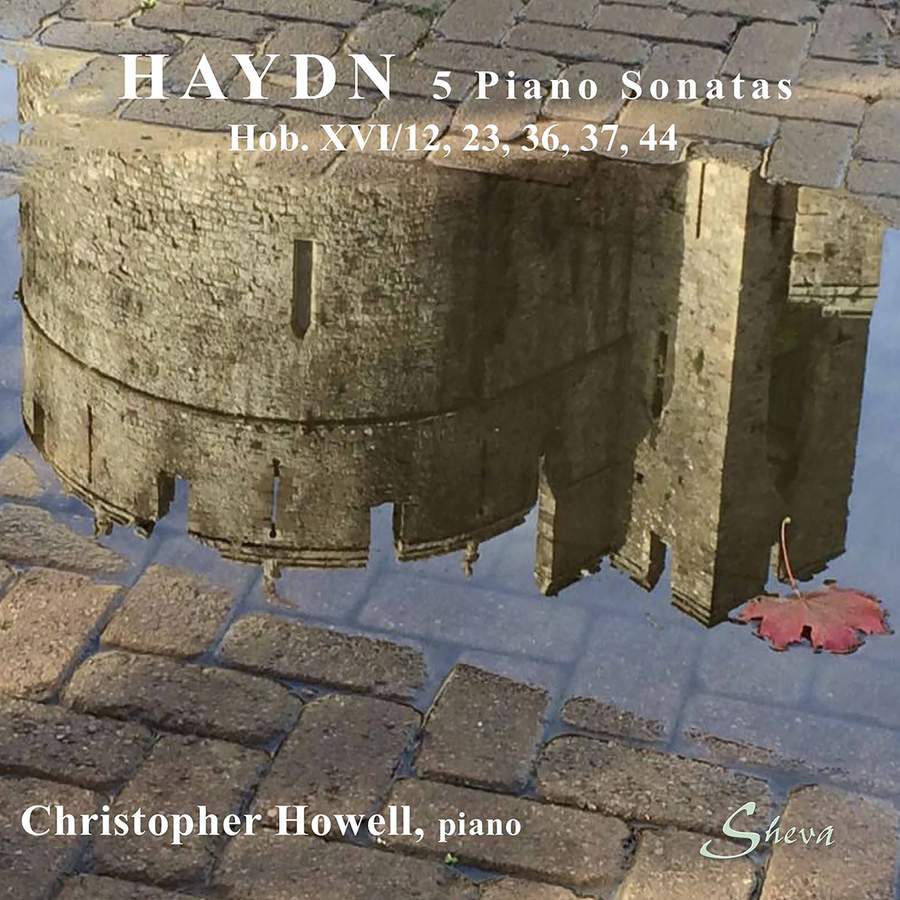
It's not British, but Haydn Piano Sonatas played by Christopher Howell

I am not a great aficionado of Joseph Haydn. That said, he is my favourite from the great triumvirate of classical composers, including Beethoven and Mozart. Furthermore, I cannot recall hearing a piece of Haydn that I did not enjoy or appreciate. When I play late 18th/early 19th century piano music, I often battle my way through his Grade 3,4 and 5 sonatas. So, I am enthusiastic about his music after all!

For the record, when I want to listen to one of Haydn’s Sonatas, I typically turn to John McCabe’s definitive recording on Decca, dating from the 1970s, and reissued in 1996 on CD. 

For the record, when I want to listen to one of Haydn’s Sonatas, I typically turn to John McCabe’s definitive recording on Decca, dating from the 1970s, and reissued in 1996 on CD.

The five Sonatas are presented on this CD in chronological order, with the earliest dating from around 1767 and the final example appearing in 1780. Detailed comments about each Sonata in this review are superfluous: perfectly adequate notes are given in the booklet. Howell is right in characterising Haydn’s Sonatas as “intimate, conversational and [sometimes] improvisational.” This suggests that they are not potboilers for public consumption at a large recital, but are personal statements, designed to be heard in private or in the chamber. This subtle aesthetic has characterised this CD.

Three issues that Christopher Howell supplies notes on are the instrument, ornamentation, and the pedal. I am delighted that he has chosen to play these sonatas on a modern Steinway as opposed to a contemporary 18th century fortepiano. I have never bought into authentic instruments, even (especially) for Bach and Handel. Others will disagree strongly! Howell recognises that ornamentation may be a controversial issue, either too much or too little. He has chosen a light touch on this issue with these recordings. The playing always sounds clear rather than fussy. Finally, he has kept his foot well under the piano stool. Pedalling would seem to do more harm than good in Haydn’s piano music. Certainly, there is no smearing or blurring in this recital. Clarity is the order of the day.

The recording reflects the “intimate” nature of the music. The liner notes give a good introduction to the five sonatas, as well as a brief CV of the pianist. I could not work out the eccentric angles of the booklet cover. There is no mention as to where the snap/s was/were taken. Most likely it is a collage.

Many readers will associate Christopher Howell with his compendia of British music by Charles Villiers Stanford and Alexander Mackenzie. These include the complete piano works of both composers, as well as song and violin music by Stanford. They are essential listening for all lovers of British Music. There have been other adventures including the enjoyable An Englishman in Italy presenting British piano music inspired by Italy, songs by Chopin and Moniuszko with the mezzo-soprano Magdalena Aparta, Tosti and Friends with English songs by Italian composers sung by the soprano Ninny Nobile, and Passé which explores romantic song in Italy featuring the mezzo-soprano Elisabetta Paglia. Most recently, Howell has released a superb new recording of Claude Debussy’s masterpiece for piano, the two books of Préludes.

I enjoyed Christopher Howell’s performance of these five Haydn Piano Sonatas. Take them one (or two) at a time: they reward close listening rather than providing background music. It is not obvious if Howell plans any more discs of Haydn’s music: it would be good if he did. This disc presents a refreshing take on these accomplished piano works.

Track Listing:
Joseph HAYDN (1732-1809)

Piano Sonata in A major Hob. XVI/12 (c.1767)
Piano Sonata in C sharp minor Hob. XVI/36 (1770-5)
Piano Sonata in F major Hob. XVI/23 (1773)
Piano Sonata in G minor Hob. XVI/44 (1771-73)
Piano Sonata in D major Hob. XVI/37 (1780)
Christopher Howell (piano)
rec. 21 June, 27 October, 24 November 2018 Studios of Griffa & Figli s.r.l., Milan, Italy.
SHEVA SH236