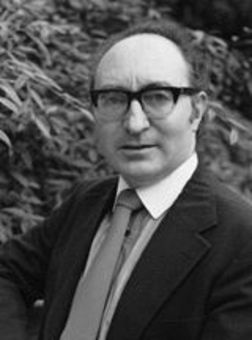
This short article from the Musical Standard September 1912 is well worth printing. It is one a precious few texts dealing Haydn Wood. It is also interesting for the long digression the unnamed author makes about the problems facing 'today's composers. I guess not too much has changed in the past 100 years.
Mr. Haydn Wood was born in the year 1882 of musical parents, at Slaithwaite, near Huddersfield. When he was three years of age his parents moved to Douglas, Isle of Man, where he studied the violin under the supervision of his brother Mr. Harry Wood, who holds a prominent position as a conductor there.
Our young musician studied well, an in 1897; at the age of fifteen he gained an open three years’ violin scholarship at the Royal College of Music. At the end of these three years he was awarded the Morley scholarship, which entitled him to three years’ additional study – six years in all. During this period he studied the violin under Senor Arbos [1], and musical composition under Sir Charles Villiers Stanford, winning many prizes during his college career. Amongst these prizes were the Dove and Hill prizes for violin playing and the Arthur Sullivan prize for composition.
In 1903 Mr. Wood left the Royal College, and, journeying to Brussels, continued his violin studies under Professor Cesar Thomson [2] the famous Belgian violinist, with whom he remained a year. On his return to London he was immediately engaged by Mme. Albani [3] for her tours, and for the last eight years he has been here violinist at all her concerts, which have consisted of tours in the British Isles, Canada, Australia, New Zealand and India. He rendered the same assistance at her recent farewell tour and concert at the Albert Hall. [4]
Mr. Wood has appeared very successfully at the Harrison Concerts, the Royal Albert Hall Sunday Concerts, the London Ballad Concerts and other functions.
As a composer Mr. Wood has a just claim to our sympathetic attention. His serious compositions show marked ability and considerable resource, both in invention and the treatment of ideas. He won a prize for a fantasy for string quartet [5] in the first of the Cobbett competitions. In the same competition the late W.Y. Hurlstone [6] won the first prize but died before the result was announced. The three best works, were published by Messrs. Novello and Co. Mr Wood’s other compositions include Lochinvar, a ballad for chorus and orchestra, which was given its performance last March by the Edward Mason Choir at the Queen’s Hall, a Pianoforte Concerto in D minor, which was first produced at a Patron’s Fund concert, and an orchestral suite, which was also first performed at a Patron’s Fund concert.
Among his lighter works are many pieces for the violin and for the pianoforte. He also composed many songs, a considerable number of which were published. Some of these are becoming very popular, for example Three Sea Songs, Twelve Little Songs of the Year, Bird of Love Divine. This last was sung for the first time by Miss Felice Lyne at one of the last season’s London Ballad Concerts.
The difficulties which bar the way to the publication of a work in any of the larger forms being almost deadly apathy of the music-buying public, which turns pale at the sight of a British name upon a piece of music, a composer of serious music is almost entirely dependent upon the public performances which a fickle fate doles out to him at the dictates of what appears to be sheer caprice. For this injustice the public is to blame. It will damn or praise a work without much apparent reference to its musical qualities, which on the other hand are often very difficult to judge at all fairly at a first hearing. If at such a performance the attitude of the audience is lukewarm, the chances of a second performance in front of the same audience are almost microscopic, and the best that can be hoped for is that a second performance may be given somewhere in the provinces with more success. This system is a bad one, for under it a work is always a novelty, and therefore subject to that undeserved neglect which ignorance so ungrudgingly awards to merit.
In view of this fact the second performance of any considerable work has a serious moral claim upon all true lovers of music. It is not to be expected, nor to be desired that they should praise indiscriminately, for such praise is actually harmful; but it is most decidedly expected that they should support such a performance by their sympathetic and careful attention, in order that they may detect real merit and give it unanimous and vigorous support, for without such support art can scarcely live.
Of such a nature is the forthcoming performance in the autumn of Mr Haydn Wood’s above-mentioned Pianoforte Concerto in D minor, the soloist being Miss Tina Lerner and the orchestra, the London Symphony. The question as to whether the concerto is good or bad is neither here nor there – what is demanded of music-lovers is that they should go and hear it and strive to arrive at a fair estimate of its value as an art-work. In the meantime the best that we wish its composer is that he should meet with just treatment at the hands of a discriminating audience.
The Musical Standard September 7 1912. p.34 [with minor edits]
[1] Enrique Fernández Arbós (1863-1939 was a Spanish violinist, composer and conductor. He divided his career between working in Spain and in London.
[2] César Thomson (1857-1931) was a Belgian violinist, teacher and composer.
[3] Dame Emma Albani DBE (1847-1930) was a leading soprano of the 19th century and early 20th century, and the first Canadian singer to become an international star. Her repertoire focused on the operas of Mozart, Rossini, Donizetti, Bellini and Wagner. She performed across Europe and North America. (Wikipedia)
[4] On Saturday 14 October 1911, Mme. Albani gave her farewell concert at the Royal Albert Hall. Artist included Adelina Patti, Muriel foster, Ada Crossley, Gervase Elwes, Plunket Greene and Sir Charles Santley. Also present were Sarah Bernhardt, Adela Verne and Haydn Wood. The concert was conducted by Landon Ronald.
[5] Phantasy for String Quartet was later score for string and renamed a Fantasy Concerto.
[6] William Yeates Hurlstone (1876-1906) was an English composer who studied piano and composition at the Royal College of Music, after gaining a scholarship. His piano professors were Algernon Ashton and Edward Dannreuther. His composition teacher, Charles Villiers Stanford, considered Hurlstone, among the many brilliant students whom he taught, to have been his most talented. In 1906, he returned to the college as Professor of Counterpoint, but died later that year of bronchial asthma. He is buried in Croydon Cemetery with members of his family. (Wikipedia)
 I recently posted about Frank Tapp’s second prize-winning work in the Daily Telegraph ‘overture writing competition.’ I found the programme notes that were included in the BBC Promenade Concert where the work was given its first performance. The work is not available on CD (or record) but one lives in hope. Certainly it ‘sounds’ as it may be an interesting work, bearing in mind that contemporary critical commentary suggested that Tapp’s music tended to sound like Elgar. Perhaps we have another Cockaigne Overture on our hands? And there is a little more on Tapp still to come!